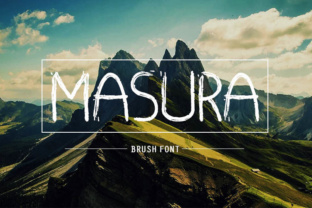
Masura Brush Font for Hand-Painted Branding
As a small business owner who designs my own packaging, social posts, and product labels, I’ve learned that Masura isn’t just another decorative font—it’s the kind of expressive, hand-painted typeface that instantly adds warmth, authenticity, and intention to every customer-facing touchpoint. Masura is a beautiful brush font which will give your design a hand painted look and feel, and that makes it ideal for brands built on craft, care, and human connection—think handmade soaps, artisanal coffee, wedding planning services, or indie skincare lines.
Masura for Product Labels and Handmade Packaging
When your candle jars, soap tins, or herbal tea bags sit side-by-side on a boutique shelf—or in a customer’s Instagram Story—you need typography that communicates quality before a word is read. Masura, as a decorative font with organic stroke variation and subtle texture, performs beautifully at 14–24 pt on printed labels. It reads clearly on matte kraft paper or cream-colored sticker stock, especially when used for brand names, flavor names (“Lavender & Oat Milk”), or short descriptors (“Small Batch • Hand Poured”). Unlike overly ornate script fonts, Masura retains legibility without sacrificing personality—making it one of the most practical premium fonts for small-batch producers who handle their own packaging design.
Masura for Café Menus and Local Business Signage
If you run a neighborhood café, bakery, or flower shop, your menu board, chalkboard sign, or takeout bag is often the first visual impression customers get. Masura works powerfully here—not as body text, but as a display font for section headers (“Today’s Specials”), item names (“Honey Lavender Scone”), or your shop name above the counter. Paired with a clean sans serif like Montserrat or Inter for prices and descriptions, Masura brings a friendly, approachable elegance that feels intentional—not trendy, not forced. As a decorative font, it signals craftsmanship; as a fonts choice for local commerce, it builds familiarity fast.
Masura for Instagram Posts and Social Media Graphics
Your Instagram feed is your digital storefront—and consistency matters. Using Masura across quote graphics, seasonal promo banners, or limited-edition launch announcements creates instant visual rhythm. Because Masura is a beautiful brush font which will give your design a hand painted look and feel, it pairs naturally with soft photography, natural textures, and muted color palettes. Try it at 36–48 pt over a light background for Reels thumbnails, or smaller (20–28 pt) for carousel slide headers. Just avoid using it for long captions or mobile-first text—it’s a headline and accent font, not a workhorse. For best results, test how Masura renders on iPhone screens before finalizing a post series.
Masura for Wedding Invitations and Elegant Branding
For wedding planners, stationers, or boutique vendors serving luxury clients, Masura delivers quiet sophistication. Its gentle contrast, slight bounce, and painterly flow make it perfect for save-the-dates, ceremony programs, or “Thank You” cards—especially when printed on textured cotton paper or foil-stamped. As a decorative font, it avoids looking too casual or too formal: it lands right in the sweet spot between heartfelt and refined. Use Masura for names, dates, and location lines; pair it with a classic serif like Playfair Display for body copy. This combination reinforces trust and attention to detail—key traits your high-intent clients are scanning for.
Masura for Website Banners and Digital Ads
Your homepage banner, email header, or Facebook ad needs to stop scrollers in under two seconds. Masura does that—not with loudness, but with character. When set large and centered over a soft-focus background image (e.g., “Handcrafted Since 2018” or “Your Skin, Simplified”), this brush font adds emotional resonance that generic fonts can’t match. As a fonts asset licensed for web use, Masura embeds cleanly via @font-face or font-display strategies. Just remember: always pair it with a highly legible system font (like Open Sans or Lato) for navigation, buttons, and paragraph text. That contrast—expressive + functional—is what makes a small business site feel both distinctive and trustworthy.
Masura for Stickers, Thank-You Cards, and Customer Touchpoints
The little things build loyalty: the sticker on your shipping box, the handwritten-style note tucked inside an order, the return address stamp on your envelope. Masura elevates all of them. It transforms a basic “Thanks!” into something tactile and personal—even when printed digitally. Because it’s a decorative font rooted in brushwork, it feels human-made, not algorithmic. And because it’s designed with consistent spacing and weight, it scales well from 8 pt (small sticker tags) up to 60 pt (large thank-you card headers). Before rolling it out everywhere, test print a few versions on your actual label printer or cardstock—some inkjet printers soften fine strokes, and Masura shines brightest when its texture stays crisp.
How to Pair Masura With Other Fonts for Balanced Branding
Think of Masura as your brand’s voice—distinctive and expressive—and pair it with a supporting typeface that plays the role of clear, reliable listener. For most small businesses, that means pairing this decorative font with a neutral sans serif (like Poppins or Nunito) for body text, pricing, and contact info. If your brand leans more literary or heritage-focused, try a warm serif like Merriweather or Cormorant Garamond. Avoid pairing Masura with other decorative or script fonts—that dilutes impact. One expressive fonts choice per project is enough.
Commercial Licensing Tips for Masura Fonts
Before adding Masura to your logo, product labels, Canva templates, or client deliverables, verify its commercial license covers your use case. Most reputable decorative fonts—including Masura—allow unlimited use for branding, packaging, and social media when purchased directly. But if you’re selling editable design files (e.g., Etsy mockups), reselling branded merchandise, or embedding in apps, double-check permissions. A single desktop license typically covers your internal use; extended licenses may be needed for broader distribution. When in doubt, review the EULA—it’s faster than rebranding later.