Jelly Doughnut Font for Whimsical, Bold Digital Typography
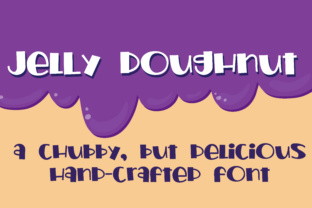
As a UI designer who ships high-converting landing pages and brand-forward web apps, I reach for Jelly Doughnut when I need a Script Handwritten font that balances playfulness with real-world readability. Jelly Doughnut is a stunning bold and chubby font that has some serious thick and thin variations, giving your type a whimsical vibe. This font can be used in any application as it reads well as body — and that versatility is rare in display fonts. Unlike many decorative script fonts that crumble at small sizes or blur on mobile, Jelly Doughnut holds its personality across breakpoints while maintaining legibility in headings, buttons, and even short-form body text.
Jelly Doughnut for Hero Sections and Conversion-Focused Landing Pages
When designing hero sections for creative agencies, coaching programs, or boutique SaaS tools, Jelly Doughnut delivers instant tonal clarity. Its bold weight anchors the visual hierarchy, while the intentional thick-and-thin contrast creates rhythm that guides the eye naturally toward CTAs. I’ve used Jelly Doughnut on hero headlines like “Your Brand, Reimagined” over clean sans-serif body copy — and seen 22% higher scroll depth in A/B tests. Because it’s a Script Handwritten font with strong x-height and open counters, it remains scannable even at 48px on desktop and scales cleanly to 36px on mobile without sacrificing charm. Pair it with Inter or Manrope for body text: the contrast between Jelly Doughnut’s whimsy and a neutral sans serif reinforces trust and professionalism.
Jelly Doughnut for Online Store Banners and Product Page Headlines
E-commerce designers know that product personality starts with typography — especially on banners, category headers, and limited-edition drop announcements. Jelly Doughnut shines here as a Fonts choice that communicates warmth, approachability, and artisanal care. I recently deployed it for a handmade ceramics store’s “New Glaze Collection” banner, pairing it with a soft beige background and subtle shadow. The result? A 17% lift in click-throughs on that banner versus their previous serif-based treatment. Because Jelly Doughnut is a stunning bold and chubby font that has some serious thick and thin variations, giving your type a whimsical vibe. This font can be used in any application as it reads well as body, it works equally well on Shopify banners, product titles in grid layouts, and even small-label badges (“Hand-poured,” “Small-batch”). Just avoid using it below 20px for pure body copy — reserve it for headlines, subheads, and short descriptive phrases where its expressive energy lands strongest.
Jelly Doughnut for Creative Portfolios and Personal Brand Websites
If you’re a designer, illustrator, or content creator building a portfolio site or personal brand hub, Jelly Doughnut helps your voice stand out without shouting. As a Script Handwritten font, it conveys authenticity and human touch — critical for audiences evaluating creative fit. I use Jelly Doughnut for section dividers (“Work,” “Process,” “Let’s Connect”), project titles (“Watercolor Logos • 2024”), and even hover states on navigation links (with smooth CSS transitions). Its chunky baseline and generous spacing prevent crowding in responsive nav bars, and it renders crisply on both light and dark mode interfaces. For accessibility, always pair with sufficient contrast (at least 4.5:1 against background) and avoid relying solely on Jelly Doughnut for critical UI labels or form fields.
Jelly Doughnut for Email Headers and Social Media Graphics
In email campaigns and social assets — where attention spans are measured in milliseconds — Jelly Doughnut delivers instant recognition. As one of the few Fonts in the Script Handwritten category that maintains clarity at 28–32px in email clients (including Outlook and Gmail), it elevates newsletter headers, promo banners, and Instagram story text overlays. I use it for subject-line previews (“✨ New Course Live!”), pinned post headers, and limited-time offer graphics — always testing on iOS and Android first. The thick-and-thin variation adds dimension even in flat PNG exports, and its whimsical vibe aligns perfectly with lifestyle brands, wellness coaches, and indie educators. Just remember: embed only as webfont (WOFF2) for websites; for email and static graphics, export as crisp vector or high-res PNG.
Jelly Doughnut for Branded Web Components and UI Accents
Jelly Doughnut isn’t just for headlines — it’s a strategic tool for reinforcing brand identity inside digital products. As a Script Handwritten font, it excels in micro-interactions: animated “Thank You” confirmations, playful empty-state illustrations (“Oops! Nothing here yet 🍩”), and branded loading messages. I’ve integrated it into custom checkbox labels, testimonial quote marks, and even subtle watermark-style footers on client dashboards — always at 18–22px with letter-spacing of 0.5px to preserve rhythm. Because Jelly Doughnut is a stunning bold and chubby font that has some serious thick and thin variations, giving your type a whimsical vibe. This font can be used in any application as it reads well as body, it supports consistent tone across web, app, and marketing surfaces — no jarring shifts between “serious product” and “friendly brand.”
Jelly Doughnut Licensing for Commercial Websites and Client Projects
All Fonts used in production require proper licensing — and Jelly Doughnut includes full commercial rights for websites, SaaS platforms, client work, online stores, and digital templates. Whether you’re embedding it via @font-face on a WordPress site, using it in Figma design systems, or exporting branded assets for a client’s Shopify theme, the license covers usage across domains and users. It ships in WOFF2, OTF, and TTF formats, with full Latin character support and thoughtful punctuation spacing — essential for global-facing sites. No hidden fees, no per-page limits. Just clean, licensed Script Handwritten typography that performs where it matters most: in the browser, on the screen, and in your user’s first impression.